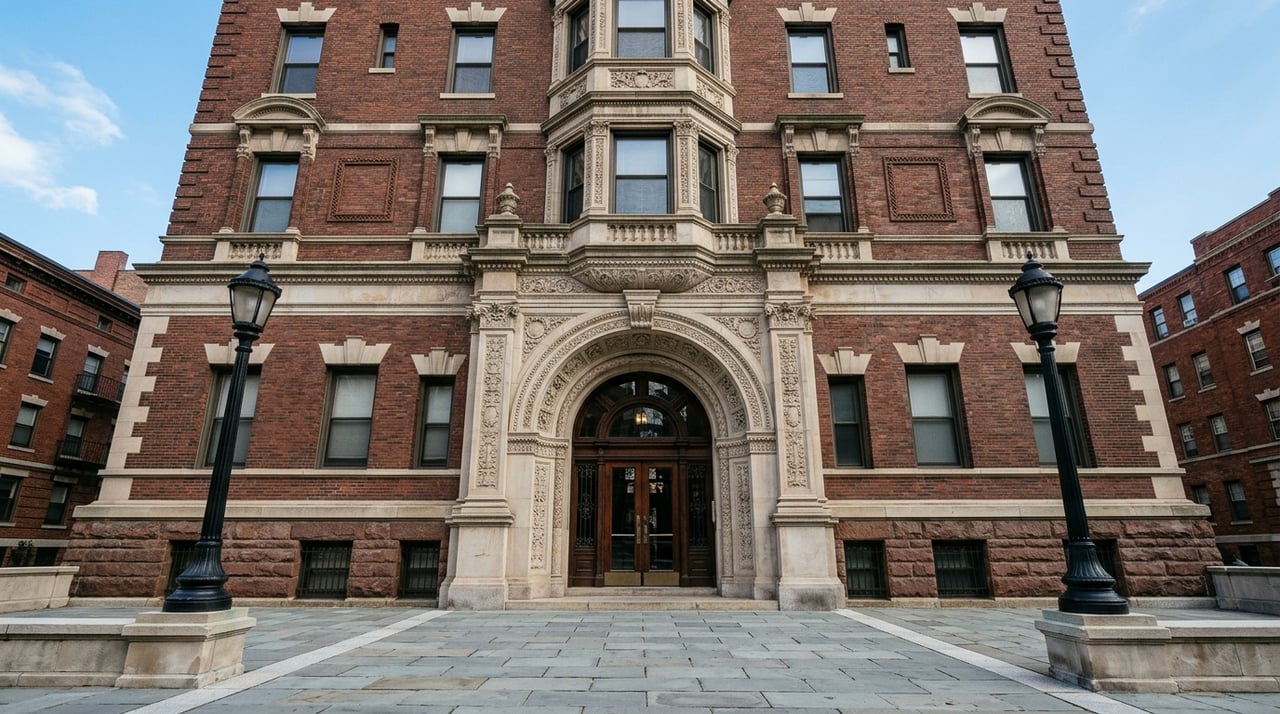
A buyer with strong credit and a solid down payment can still lose financing on a Streeterville condo today. Not because of anything on the loan application. Because of what's sitting in the property management office's filing cabinet. Since August 3, 2026, Fannie Mae and Freddie Mac retired the fast-track review process that let well-qualified buyers skip a deep look at a building's finances. Every condo project with more than ten units now goes through Full Review: budget, reserve funding, insurance, delinquency rates, and pending litigation, all of it, regardless of how much the buyer puts down.
For a Lincoln Park townhome or a single-family sale, that change barely registers. For Streeterville, a neighborhood built almost entirely on high-rise towers along the lake and the river, it changes what "under contract" actually means. The building's paperwork, not the buyer's file, is now the thing standing between an accepted offer and a closed deal.
What Changed on August 3
Before this year, a buyer putting 10% or more down on a primary residence could often qualify through Fannie Mae's Limited Review or Freddie Mac's Streamlined Review, a shortcut that checked basic litigation and insurance information without digging into whether the association's reserves could actually cover a roof or elevator replacement. Lender Letter LL-2026-03 and the matching Freddie Mac Bulletin 2026-C, both issued March 18, 2026, eliminated that shortcut for loan applications dated on or after August 3, 2026. The trigger is the application date, not the closing date, so deals that were already in motion before August 3 can still finish under the old rules. Anything opened after that date goes through Full Review.
Full Review comes with its own tightening. Reserve studies must now recommend and follow the highest funding level identified in the study, and the "baseline funding" method, where a board lets reserves run close to zero between projects, is no longer acceptable to either agency. A study also has to be less than 36 months old or it gets treated as unreliable, pushing the building back to a default 10% reserve floor or outright ineligibility.
That floor is about to move again. Beginning with loan applications dated January 4, 2027, the minimum reserve allocation rises from 10% to 15% of an association's annual budgeted assessment income. Boards funding at the old minimum have roughly three months from today to decide whether they raise dues, levy a special assessment, or take out a reserve loan before that deadline hits.
| Before August 3, 2026 | After August 3, 2026 | |
|---|---|---|
| Review type for buildings over 10 units | Limited Review / Streamlined Review available | Full Review mandatory |
| What gets checked | Basic litigation and insurance | Full budget, reserves, insurance, delinquency, litigation |
| Reserve funding method | Baseline funding permitted | Baseline funding banned |
| Reserve study age | Loosely enforced | Must be under 36 months |
| Minimum reserve allocation | 10% of budgeted income | Rising to 15% for applications dated Jan 4, 2027 and later |
Why Streeterville's Buildings Feel This First
The rule applies everywhere, but it lands hardest where the building stock is exactly what the GSEs are worried about. Streeterville is a neighborhood of curtain wall towers, shared central plants, and structures that have spent decades absorbing wind and moisture off the lake. Central boilers and chiller systems serve dozens or hundreds of units at once, so when one of those systems needs replacement, it isn't a per-unit repair, it's a building-wide capital project. Elevator modernizations in towers of this age and height run into the hundreds of thousands of dollars per cab. Add the lake and river proximity that drives extra waterproofing and drainage work on parking structures below grade, and you get a category of building where deferred maintenance shows up in bigger, more expensive chunks than it does in a Lincoln Park three-flat.
Chicago's own Façade Inspection and Safety Program adds another layer specific to this kind of housing stock. Buildings above certain heights are required to undergo periodic façade inspections, and when those inspections turn up required repairs, the result is often a major capital project and, if the reserves aren't there, a special assessment. A tower that's due for its façade cycle at the same time its reserve study is being scrutinized under Full Review is exactly the scenario the new lending rules were written for.
The Fannie Mae and Freddie Mac tightening didn't come from nowhere. Both agencies began revising condo underwriting standards after the 2021 partial collapse of the Champlain Towers South condominium in Surfside, Florida, which investigations tied to long-documented but unaddressed structural deterioration and underfunded reserves. That history explains why the agencies are treating reserve adequacy, not just current financial statements, as the thing that determines whether a project qualifies for financing at all.
The Two Documents That Matter More Than the View
Two pieces of paper now carry more weight in a Streeterville transaction than they used to: the reserve study and the Section 22.1 resale disclosure package.
The reserve study is a physical and financial analysis of the building's major components, roof, elevators, façade, mechanical systems, paired with a funding recommendation. The number to look for is percent funded, the ratio of what the association actually has on hand to what it should have given the wear on those components. A study that's more than 36 months old, or one built on baseline funding, won't satisfy a lender under the new rules, which means a beautiful unit in a building with outdated paperwork can become a financing problem even for a buyer who is fully qualified on paper.
The Section 22.1 disclosure, named for its section of the Illinois Condominium Property Act, is the resale information package a seller's association has to produce when a unit goes under contract. It includes the declaration and bylaws, current budgets and financials, insurance details, meeting minutes, and notices of pending special assessments or litigation. In a high-rise market like Streeterville, where elevators and façade systems drive most of the capital risk, this package is where that risk actually shows up in writing, if the board has kept good records.
Illinois doesn't yet require a reserve study on any fixed schedule. Section 9 of the Condominium Property Act tells boards to consider "reasonable reserves" and to weigh any independent professional reserve study they've obtained, but it stops short of mandating one exists at all. That gap is why documentation quality varies so much from tower to tower, and why legislation now pending in Springfield, HB2563, would require associations to conduct and update a reserve study every five years and make it available to any prospective buyer on request. The bill hasn't passed as of this writing, which means for now the burden falls on buyers and their agents to ask for the study rather than assume one exists.
What This Means If You're Under Contract Now, or About to List
If you're a buyer writing an offer on a Streeterville high-rise, ask for the reserve study and its date before you remove your inspection contingency, not after. Check whether it uses full funding or the baseline method the GSEs no longer accept, and ask management directly when the building last completed its façade inspection cycle and whether that inspection flagged any required work. Read the board minutes for discussion of upcoming capital projects even if nothing has been formally voted yet, since Illinois disclosure rules only require sellers to flag assessments that have already been approved, not ones still headed toward a vote.
If you're preparing to list a unit, the same documents work against you if they're thin. A stale or baseline-funded reserve study can slow or sink a buyer's financing on your unit even when your own personal finances and disclosures are spotless, which makes the building's paperwork part of your marketability whether you serve on the board or not. Getting ahead of that, by confirming your association's study is current and requesting an updated 22.1 package before you list, removes one more thing that can stall a closing once you're under contract.
FAQ
Does this rule affect cash buyers? No. Full Review applies to loans sold to Fannie Mae or Freddie Mac. A cash purchase or a portfolio loan isn't subject to it directly, though a building that can't pass Full Review shrinks the pool of financed buyers for every unit inside it, which affects resale value for everyone regardless of how the current sale is being paid for.
What if the building has ten units or fewer? Both agencies expanded their Waiver of Project Review to cover new and established projects with ten or fewer units, provided the building isn't part of a larger master association. Most of Streeterville's high-rise inventory sits well above that threshold, so this exception rarely applies here.
Is a reserve study legally required in Illinois right now? Not yet. Section 9 of the Condominium Property Act asks boards to consider reasonable reserves and any study they've obtained, but doesn't mandate one on a set schedule. HB2563, which would require a study every five years and make it available to prospective buyers, is pending in the Illinois legislature and hadn't passed as of this writing.
Every one of these documents, the reserve study, the board minutes, the 22.1 package, tells a different piece of the same story about a building. I spend time with all three before a client writes an offer or signs a listing agreement, because in this market the view sells the unit but the paperwork closes the deal. If you're evaluating a Streeterville building or getting one ready to list, reach out to Millie Rosenbloom and let's go through the documents together before you're under a deadline to.