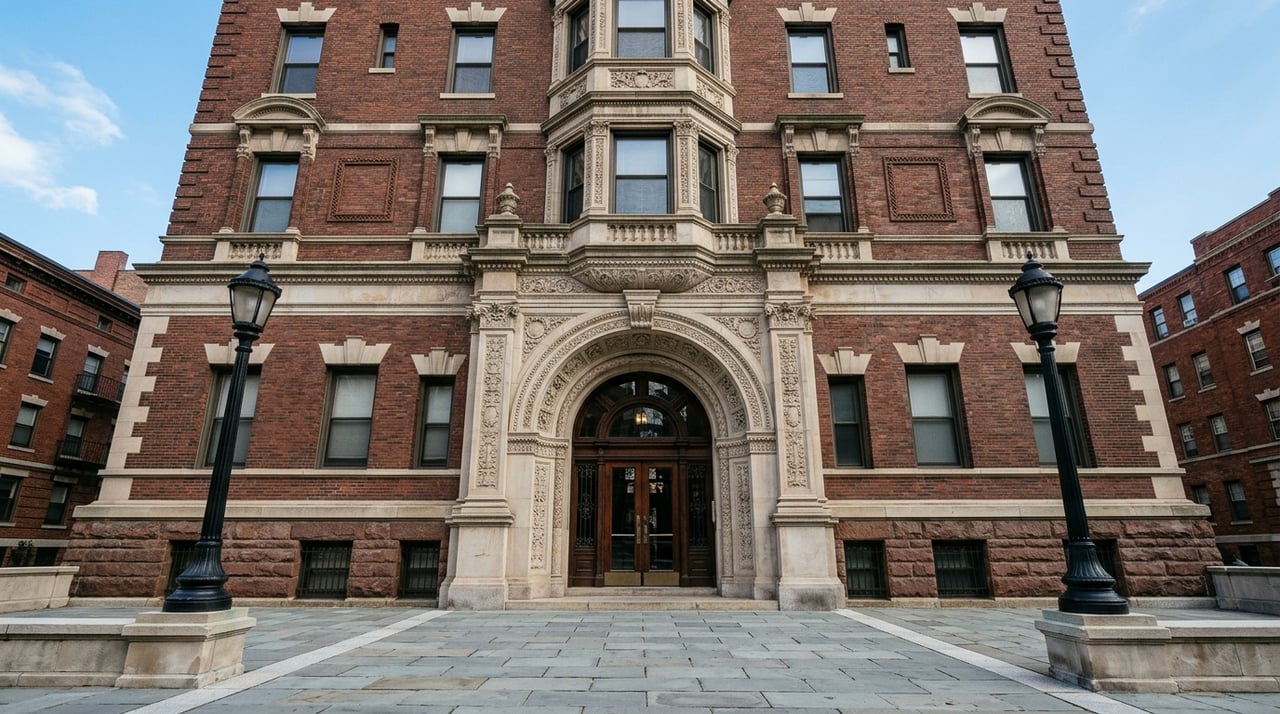
In July 2026, owners at 200 North Dearborn Street closed out a building-wide vote on whether to sell their entire 310-unit tower to a single buyer for $98 million. Forty-three percent voted yes. Thirty-four percent voted no. The rest didn't vote at all. The National Law Review explains that the deal needed 85 percent to pass in Chicago. It wasn't close.
That vote was the third attempt in four years to convert this building from condos to apartments in one transaction, and it won't be the last building in the Loop to face one. If you're shopping downtown condos and comparing the Loop's pricing against River North or Streeterville, there's a mechanism at work in some of the Loop's most affordable vintage towers that a listing sheet won't show you: a legal path that lets an investor buy a building out from under its owners, whether every owner wants to sell or not.
What a deconversion vote actually does
The process is called a condo deconversion, and Illinois law spells it out plainly. Under Section 15 of the Illinois Condominium Property Act, an investor who wants to buy every unit in a building and convert it to a single rental property needs the affirmative vote of owners representing at least 75 percent of the building. If they clear that bar, every owner is bound to sell, including the ones who voted no.
Chicago raised its own bar higher. A 2019 city ordinance requires 85 percent approval for any deconversion sale inside city limits, a full 10 points above the statewide minimum, passed specifically because aldermen were hearing from constituents who felt cornered by investors quietly assembling large stakes in their buildings before calling a vote. The Illinois Department of Financial and Professional Regulation walks through the mechanics if you want the plain-language version: once the threshold is met, the building comes out of the Condominium Property Act entirely and every remaining unit becomes an apartment.
That 85 percent threshold is exactly why the July 2026 vote at 200 North Dearborn failed. Forty-three percent isn't close to 85, even with three years of the buyer building support inside the association.
Why this particular building keeps getting called
200 North Dearborn is a full-amenity tower steps from the Clark/Lake and State/Lake L stops, with door staff, resident parking, and pricing that runs well under what comparable new construction commands elsewhere downtown. One-bedroom units in the building have listed in the low to mid $200,000s, with two-bedrooms landing between $350,000 and $500,000. That's a meaningful gap below the Loop's broader resale market, where the median condo sale sat around $427,000 as of March 2026.
That gap is the profile. A well-located, full-amenity, older building with dispersed individual owners and prices below what the location would otherwise support is precisely what deconversion investors look for, because the difference between what 310 separate owners will accept per unit and what the assembled building is worth as a single rental asset is where the buyer's return lives.
The building's history bears this out. An investor group led by Yitzy Klor, operating as Strategic Properties of North America and later as YK Investments, has now made three runs at the building since 2022.
| Attempt | Offer | What happened |
|---|---|---|
| 2022 | $95 million | Owners initially voted to approve the sale, but the buyer spent over two years unable to secure financing. The board terminated the contract in 2024. |
| Early 2026 | A renewed offer | The condo board declined to advance it to a building-wide vote. |
| May–July 2026 | $98 million | The board voted 3-2 to send it to owners. The building-wide vote closed in July 2026 with roughly 43 percent approval, far short of the 85 percent required. |
This isn't a one-building story. The same buyer previously walked away from a $190 million bulk offer on a River North tower called Ontario Place after the board there also grew tired of waiting on financing. Chicago has a longer history of these deals working, too. A 391-unit Gold Coast building sold through deconversion for $107 million in a prior transaction, and River City in the South Loop took three separate elections before owners finally reached 75 percent. Not every attempt fails, and not every attempt drags on for years, but the pattern of an investor circling a well-located, below-market building with scattered ownership is one that shows up across the Loop, River North, and the Gold Coast, not just at one Dearborn Street address.
The buyer who says yes still isn't finished
A passed vote isn't a closing. During the first 200 North Dearborn attempt, owners who wanted out were barred from selling their units individually while the sale was pending, a condition that turned a routine two-year timeline into a wait of more than two years with no closing date and no ability to walk away and list elsewhere. The Real Deal reported that one owner at the time called the wait "hell."
Weeks after the third 200 North Dearborn vote failed, Klor's own financing came under separate pressure. Court filings from Cook County show a $51 million default tied to 137 units the investor personally controls across seven Chicago condo towers, with foreclosure proceedings now underway. The timing is instructive. The same investor pursuing a building-wide buyout in the Loop was, in the same season, defending his own portfolio from lenders. A deconversion offer isn't just a question of whether owners want to sell. It's a question of whether the buyer on the other side of the table can actually close, and that answer isn't always visible from inside the building.
What this means if you're comparing the Loop to other downtown neighborhoods
Below-market pricing in an older, full-amenity Loop tower isn't automatically a warning sign. Plenty of these buildings have operated for decades without a single buyout attempt, and resale activity across the Loop has kept moving even as this story played out. But a below-market unit in a building with dispersed individual ownership is worth one extra question before you write an offer: has this association fielded a deconversion offer before, and if so, how did it resolve.
Your attorney can request board meeting minutes and the resale disclosure package as part of standard due diligence, and those documents typically show whether a bulk sale offer was ever presented, rejected, or put to a vote. That's a five-minute question with a real answer, and it belongs on the same checklist as reserve studies and special assessments, not as an afterthought.
If a deconversion does pass while you own in a building, precedent from past Chicago deals like the Kennelly Square conversion on North Wells shows some buyers have negotiated rent-back arrangements at below-market rates for a period after closing, though terms like that are negotiated case by case and never guaranteed.
FAQ
If my building has a pending deconversion offer, can I still sell my unit? At 200 North Dearborn, owners were barred from selling their units individually during the first 2022 attempt while the sale was pending.
What vote threshold applies to a Chicago condo building specifically? Eighty-five percent of ownership interest, under a 2019 city ordinance. That's higher than the 75 percent Illinois law requires for condo buildings anywhere else in the state.
Is a low price on a vintage full-amenity Loop condo a red flag by itself? No. It's one input. Combine it with the building's deconversion history, if any, before deciding what the pricing actually reflects.
If you're weighing a Loop building against options in River North, Streeterville, or Gold Coast, this is exactly the kind of building-specific homework worth doing before you fall for a price per square foot. Millie Rosenbloom has spent decades reading the fine print on Chicago buildings just like this one. Reach out for a walkthrough of a specific address, or get a free home valuation if you're the one weighing whether to sell into this market.
This article is general information, not legal, tax or financial advice. Consult a qualified professional about your situation.