When a home hits the market and multiple offers come in, it’s easy to assume the highest number automatically wins.
It doesn’t.
After sitting on both sides of the table, representing sellers reviewing a stack of offers and buyers trying to make theirs stand out, I’ve learned that the strongest offer is rarely just about the purchase price. Sellers are evaluating the entire package: certainty, timing, terms, financing, flexibility, and ultimately, how confident they feel that this buyer will actually make it to the closing table.
And that perspective changes how I advise my buyers, too.
When I’m Sitting Next to a Stack of Offers
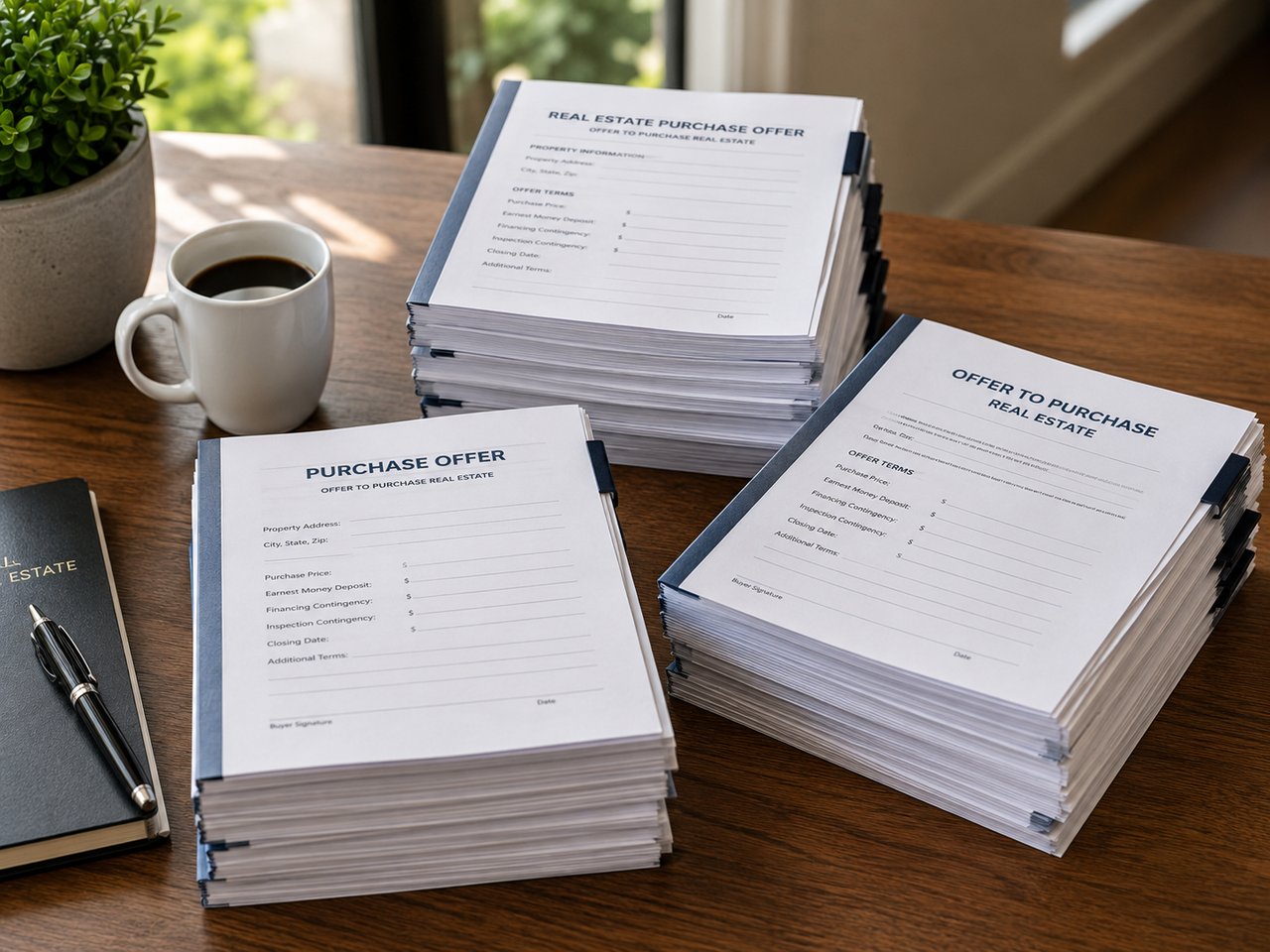
Imagine a seller’s kitchen table covered in offers. There may be several numbers that look very compelling at first glance. But once you start reading the details, the offers can look very different.
One buyer may be offering the highest price but asking for significant concessions, a long inspection period, a specific closing date that doesn’t work for the seller, or relying on financing that introduces more uncertainty.
Another buyer might be offering slightly less but has strong financing, a substantial down payment, limited contingencies, a closing date that perfectly aligns with the seller’s next move, and a clean, straightforward contract.
Which one would you choose?
That’s where strategy comes into play.
As a seller’s agent, I’m asking questions beyond “Who offered the most?”
How likely is this buyer to close?
How complicated will this transaction be?
Does their timeline work for my seller?
What are they asking the seller to give up?
How strong is their financing?
Where are the potential points of friction?
The goal is to determine not just which offer has the highest value, but which offer provides the seller with the best combination of value and certainty.
Because an offer is only as good as the likelihood that it actually closes on the terms presented.
The Buyer’s Perspective Is Where This Gets Interesting
When I’m representing a buyer in a multiple-offer situation, I take everything I’ve learned from sitting on the seller's side and flip the perspective.
Instead of simply asking, “How much more should we offer?” I ask, “What would make this offer the easiest one for the seller to say yes to?”
And often, the first step isn’t writing the offer at all. It’s picking up the phone.
Relationships matter enormously in this business. When I know the listing agent, I can call them directly and have a real conversation: What is most important to your seller? What does the ideal offer look like? Is there a particular closing date they need? Are there terms that would make our offer more attractive?
You can learn a lot from a conversation that you simply can’t learn by looking at the MLS.
That’s one of the reasons I’ve always believed that relationships are such an important part of being a good Realtor. When you’ve built trust and credibility with other agents, you can have honest conversations. You can ask the questions that help your clients make smarter decisions. And you can go into a multiple-offer situation with information, not guesses.
Sometimes the answer is price. Sometimes it’s timing. Sometimes the seller wants certainty or flexibility more than another $10,000.
Once I understand what matters most to the seller, I can help my buyer build an offer around those priorities.
Every situation is different, but one principle remains consistent: make your offer solve a problem for the seller.
If the seller needs flexibility, give them flexibility.
If certainty is their priority, give them certainty.
If timing is everything, make your timeline work for theirs.
You want the seller to look at your offer and think, “This works for us.”
The Human Side Matters, Too
Real estate transactions are financial decisions, but they’re also deeply personal.
For many sellers, their home represents years of memories. They may care about who is buying it, how the transaction feels, and whether they can trust the people on the other side of the table.
Professionalism matters. Communication matters. Reputation matters. The way an offer is presented matters.
When I’m representing a seller, I want to understand what actually matters to them. When I’m representing a buyer, I want to uncover what matters to the seller and build the strongest offer we can around those priorities.
The Best Offer Is the One That Makes Sense
Multiple-offer situations can become emotional very quickly. Buyers can feel pressure to throw everything they have at a property, while sellers can get caught up in the excitement of seeing a number climb.
My job is to bring the conversation back to strategy.
For sellers, that means looking at the whole offer, not just the headline number.
For buyers, it means understanding that winning isn’t always about being the person who offers the most. It’s about being the person who offers the most compelling combination of price, terms, certainty, and ease.
Because when you’re sitting across the table from a stack of offers, you’re not simply choosing a number.
You’re choosing the path you believe gives you the best outcome, and the greatest confidence that you’ll actually get there.